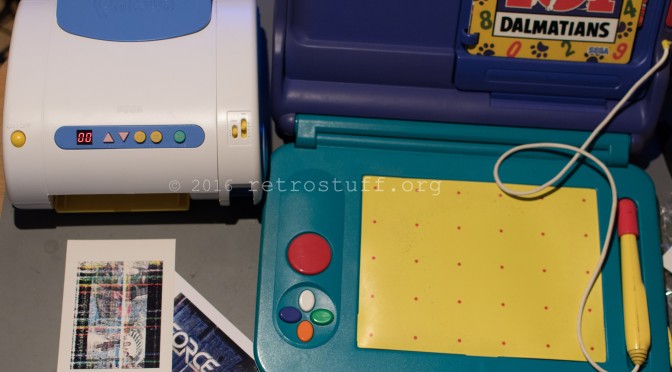
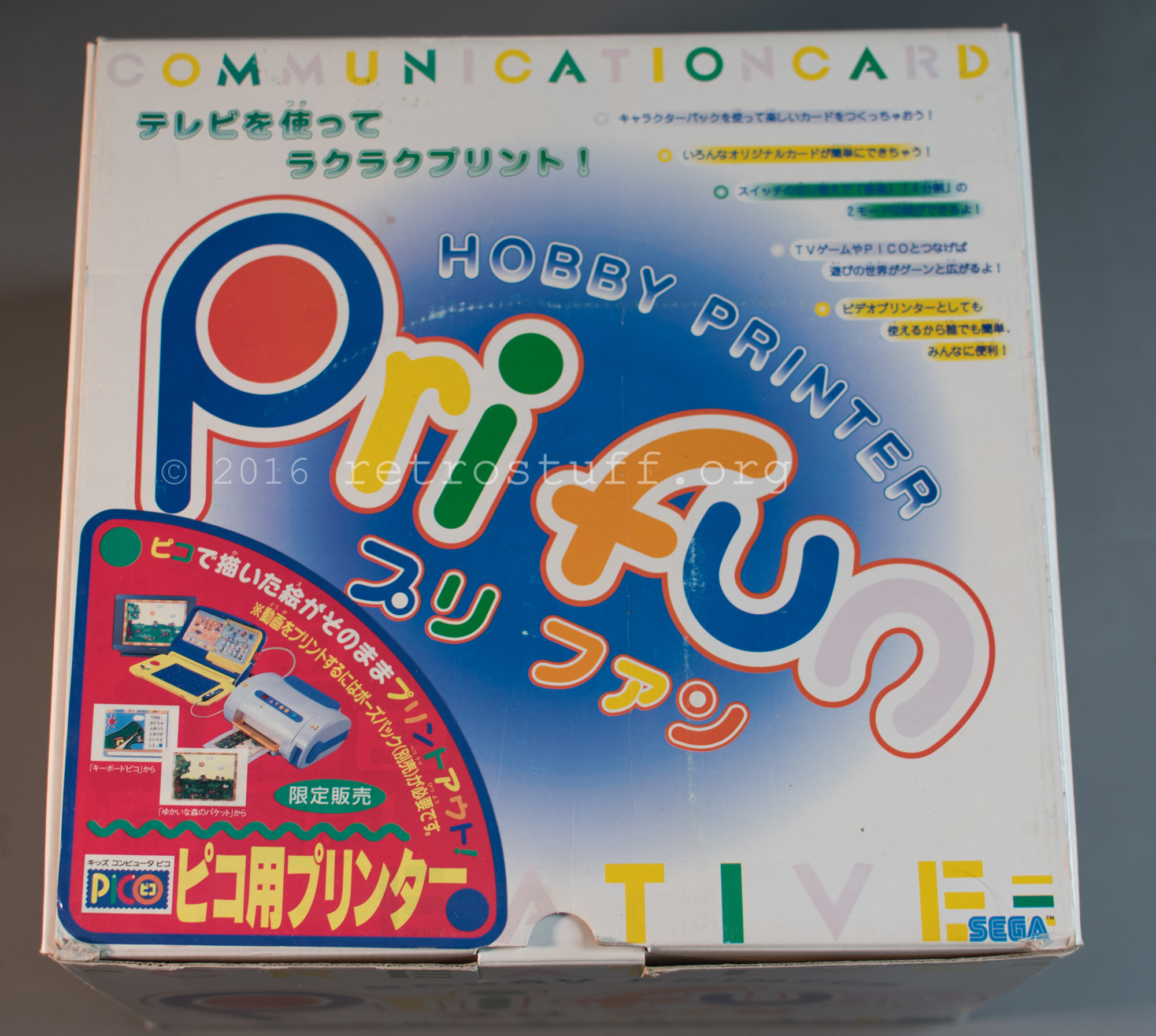
Today, I’m finally testing the Sega Pri Fun printer that I bought 4-5 years ago. Back then, it was still sealed.
The printer was marketed by Sega in 1995 as an add-on for the Pico and Saturn game consoles. You won’t find much information about it on the WWW except a small article at Sega Retro and a commercial on YouTube.
This has been figured out and posted by TeamEurope in 2012 (link, link via link). Unfortunately, the original document has vanished from the WWW. I’ll try to recreate this tutorial here:
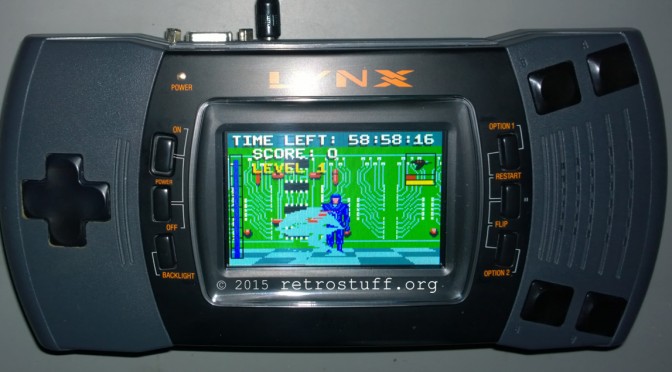
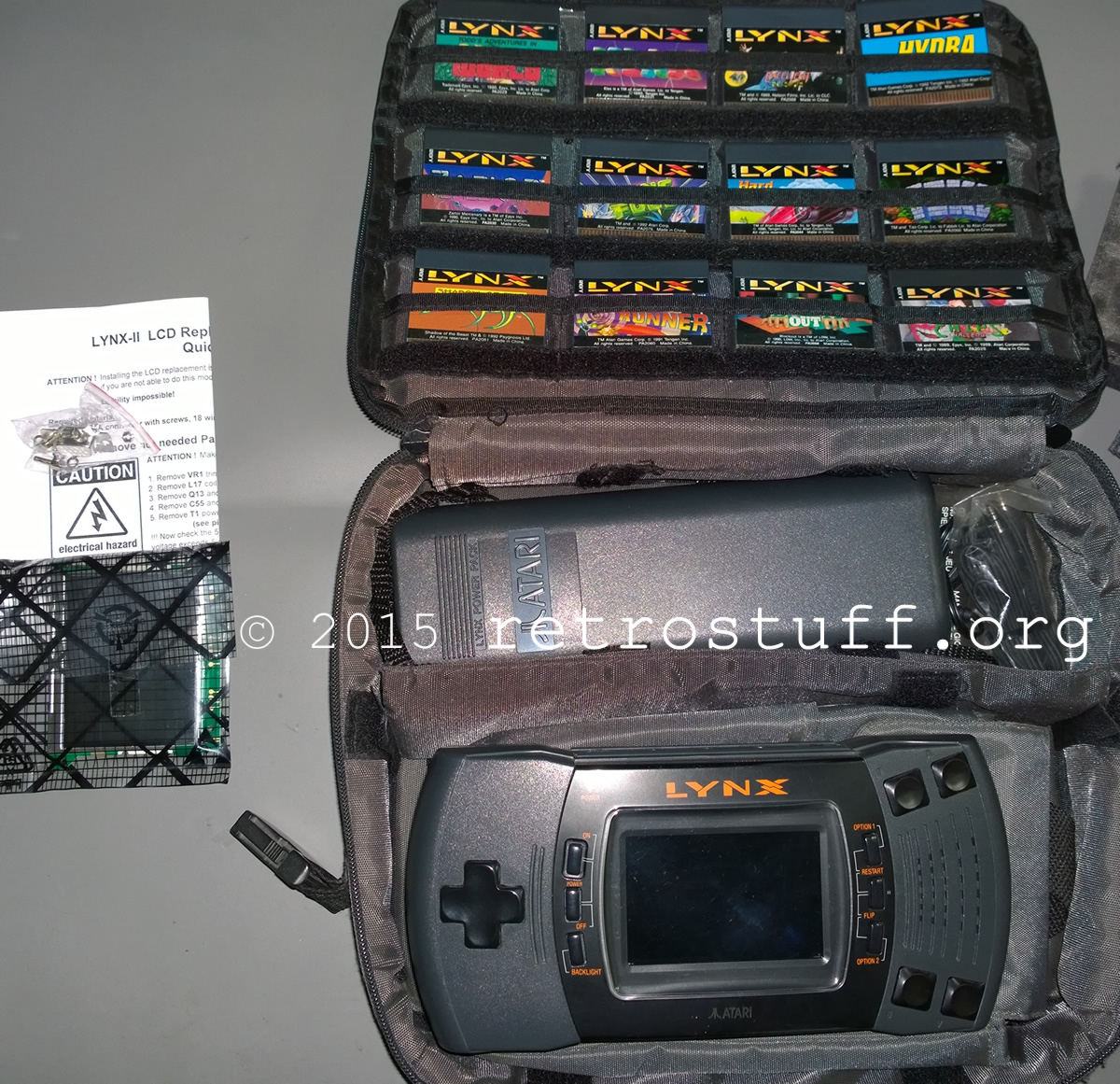
Replacing the aged Lynx screen with a new LCD screen is simple. All you need is an Atari Lynx II and the LCD screen kit by McWill (and optionally, a 5 V regulator).
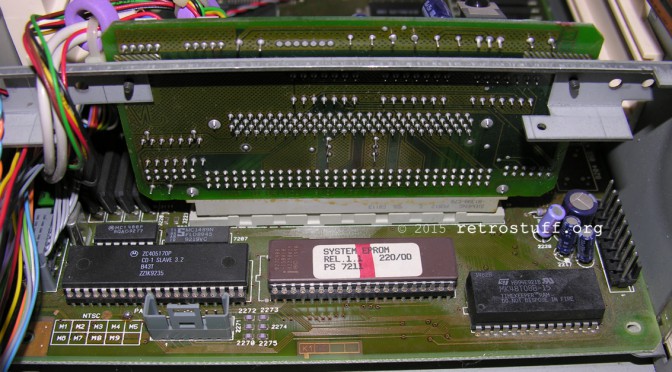
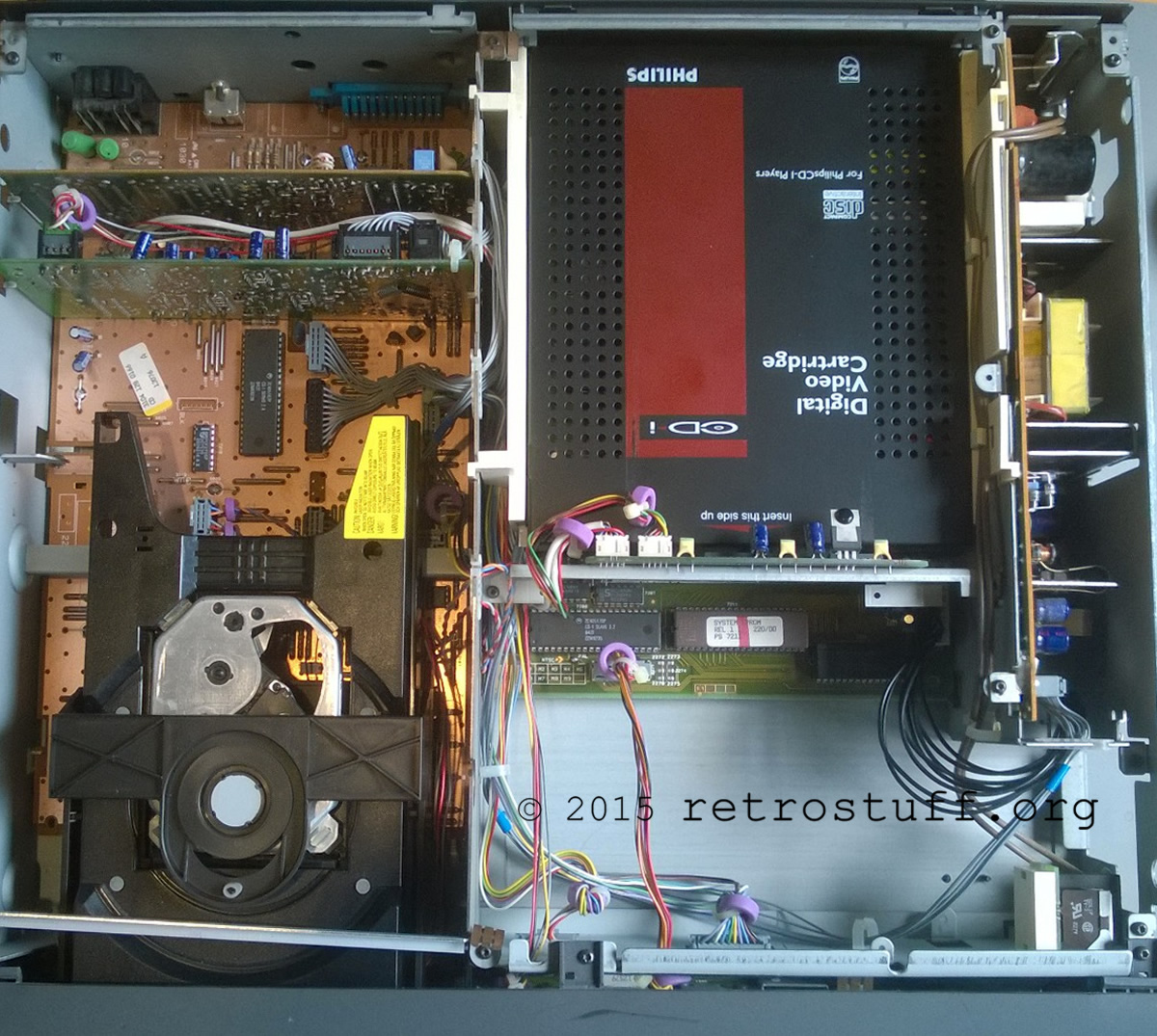
Recently I found a CDI 220/00 with Mini MMC mainboard. It’s a heavy and bulky unit that contains lot of PCBs, wires, screws and metal parts. It’s one of the first consumer CD-i players. Later models have all components on one single mainboard (Mono).
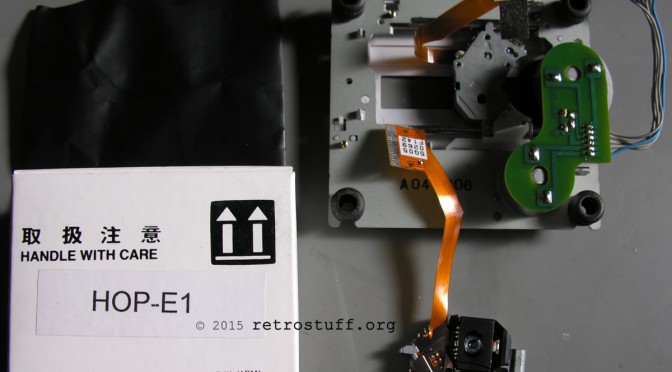
I’ve been struggling with a weak PC-FX laser for quite some time now. What kept me from replacing the laser pickup (also known as the optical block or laser sledge) was the supposedly significant effort involved. Taking apart and reassembling the PC-FX was long considered something you wouldn’t wish even on your worst enemy (a full teardown can be found here). However, it’s surprisingly easy to get to the drive unit if you simply follow these instructions.
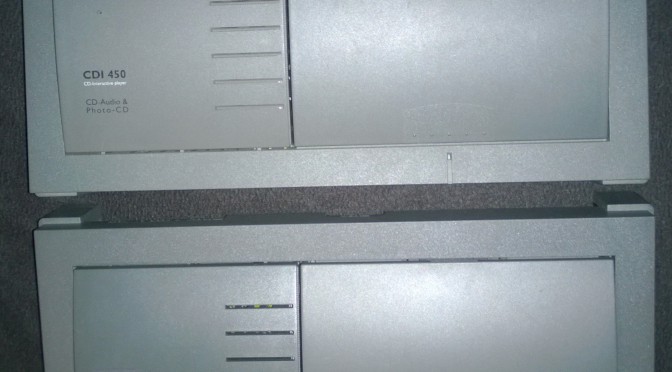
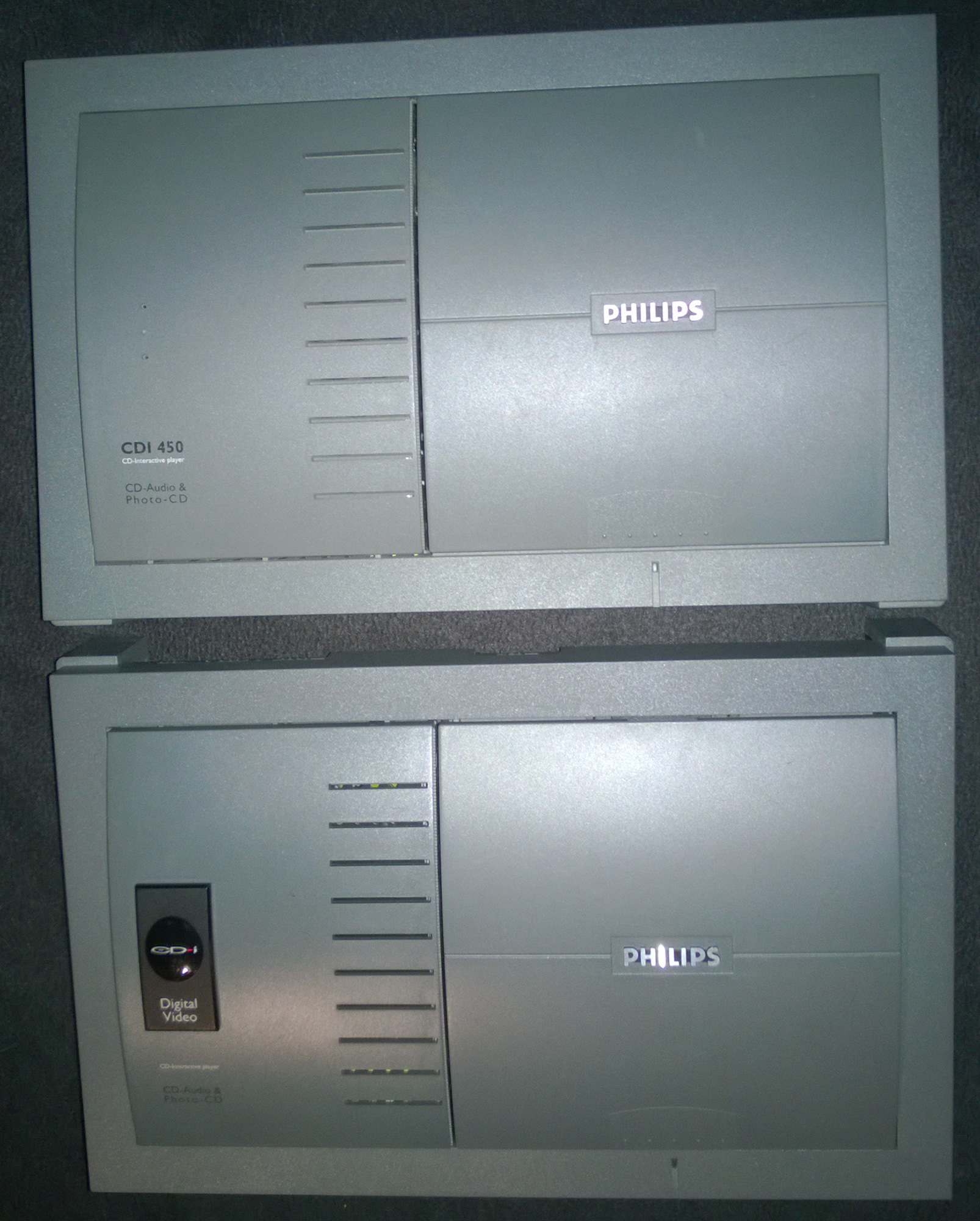
More Philips CDI stuff arrived this week: The twins CDI 450/00 and CDI 550/00. While the 450 is a very common low-cost model, I’ve never seen a 550 before (actually the 450 + DVC was sold as 550).
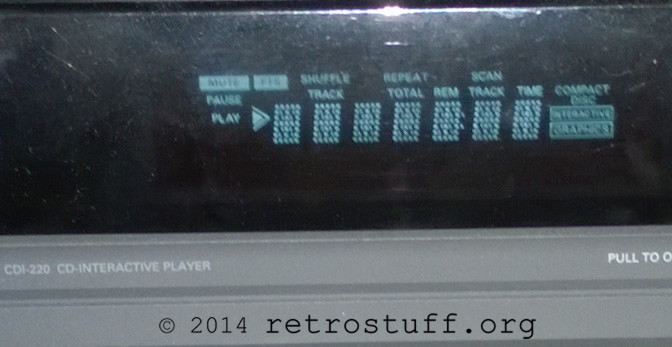
Chapter 5 of the Philips CDI 220 service manual (the manual that helped finding the right spots for the 60 Hz modification) deals with the built-in service software:
5 SERVICE SOFTWARE

In the set there are 3 different testsoftware available:

1. FTD-display/keyboard test

2. Low Level test

3. Service Shell
I’m going to cite the instructions for 1. and 3. and add pictures or comments if needed (I’m not going to cover 2. as it requires an extra service pcb and/or terminal). Note: The service manual is valid for the Philips CD-i players CDI 220/20 220/25 220/39 (PAL) and CDI 220/31 220/37 (NTSC). On other players/models the test instructions should be similar if not the same.Continue reading Philips CDI 220 Service Software / Self-Test→
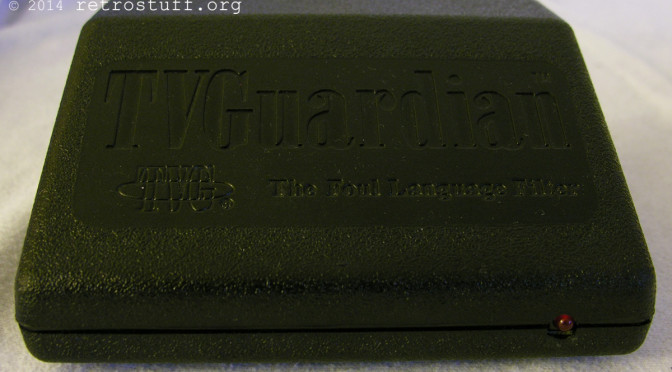
The TVGuardian 101 is a terrible device for uptight people that detects and censors words like “hell” in the CC subtitles. It is also supposed to mute the audio when an offending word or sentence is detected. For more details, see the manual that is available here: TVGuardianOwnersManual101.pdf.
When the filter is turned off, this device is a very cheap alternative to CC decoders and can be used to superimpose CC subtitles on the LaserDisc video signal.